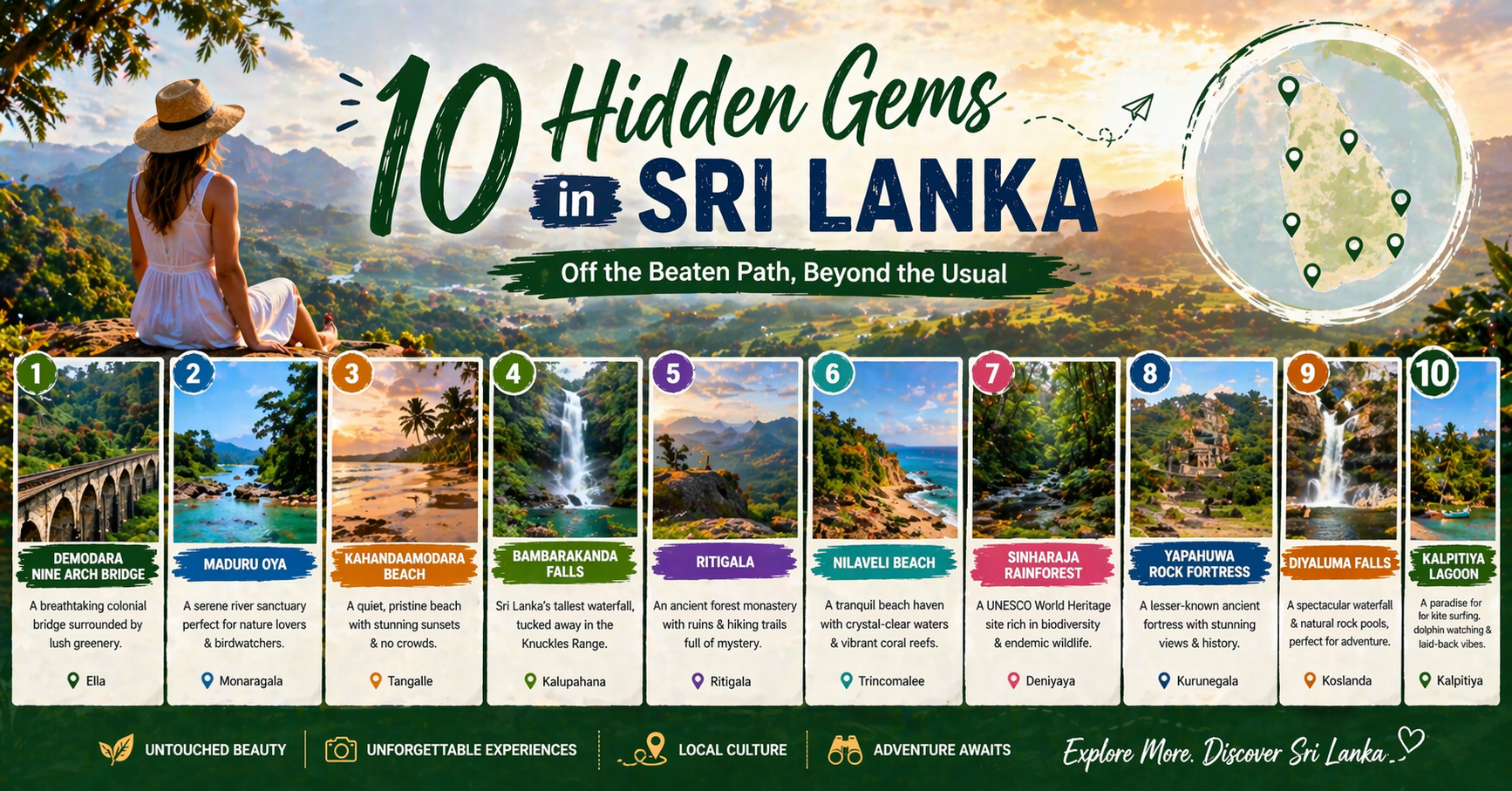

The Best Time to Visit Sri Lanka
Sri Lanka is a year-round destination — but the best time to visit depends entirely on where you are going and what you want to do. Unlike single-season destinations, Sri Lanka has two distinct monsoon systems that create different ideal windows for different regions. Understanding them is the key to planning a perfect trip.
The good news? With savvy planning, there is no truly bad time to visit Sri Lanka. When the west coast is wet, the east coast is glorious. When the hills are cool and misty, the beaches of the south are golden and calm. The island is small enough — just 65,610 sq km — that you can always chase the sunshine.
Understanding Sri Lanka's Two Monsoon Systems
Sri Lanka experiences two separate monsoon patterns:
- South-West Monsoon (Yala Season): Affects the west coast, south coast, and hill country. Active May–September. The western and southern beaches (Colombo, Bentota, Mirissa, Unawatuna) can be rough and rainy during this period.
- North-East Monsoon (Maha Season): Affects the north and east coasts. Active October–January. This is when Jaffna, Trincomalee, and Arugam Bay see their heaviest rain.
The cultural triangle (Sigiriya, Anuradhapura, Polonnaruwa) sits in the dry zone and is largely unaffected by either monsoon — making it a year-round destination. The hill country (Kandy, Nuwara Eliya, Ella) receives rain from both monsoons but is at its best from January to April.
Month-by-Month Guide
January — Peak Season
January is arguably the single best month to visit Sri Lanka. The south-west monsoon has cleared, the north-east monsoon is fading, and the entire island enjoys relatively settled, sunny weather. The south and west coasts are at their calmest — perfect for Mirissa whale watching (blue whales peak January–April), Galle Fort exploration, and Bentota beach relaxation. Book hotels well in advance; this is the busiest month.
February — Peak Season Continues
February remains excellent across most of Sri Lanka. The beaches are at their finest, whale watching is superb, and the weather is warm without being oppressively hot. Nuwara Eliya Race Week (usually in March–April) draws local crowds but February is peaceful. Valentine's Day makes this peak honeymoon season — book romantic packages months ahead.
March — Great for Most Regions
March is still excellent for the south and west coasts and the cultural triangle. The hill country is beautiful — Nuwara Eliya begins its famous race and flower festival season. March brings slightly warmer temperatures than January–February, but conditions remain ideal for most activities including Yala safaris (the dry season concentrates wildlife around waterholes).
April — Sinhala & Tamil New Year
April 13–14 marks Sinhala and Tamil New Year — Sri Lanka's most important cultural celebration. This is a wonderful time to experience authentic local culture: traditional games, oil anointing ceremonies, sweet-making, and family gatherings. However, many shops, restaurants, and services close for several days around New Year. Transport is packed and hotel prices rise. Book everything well in advance and plan for reduced services.
May–June — Shoulder Season, East Coast Opens
The south-west monsoon arrives, bringing rain to the west and south coasts. However, this is precisely when the east coast — Arugam Bay, Trincomalee, Batticaloa — enters its finest season. Arugam Bay is a world-class surf destination, and May–August brings clean swells without the crowds of peak season. The cultural triangle and hill country remain excellent year-round.
July–August — East Coast Peak, Kandy Perahera
The east coast is at its absolute best: Trincomalee's Marble Beach and Pigeon Island offer crystal-clear waters perfect for snorkelling and diving. Arugam Bay reaches peak surf season in July–September. In July–August, the Kandy Esala Perahera — Sri Lanka's greatest festival — takes place over ten nights. Hundreds of elaborately decorated elephants, fire-dancers, whip-crackers, and drummers parade through the streets. If you can only witness one Sri Lankan event in your lifetime, make it the Perahera.
September — Transition Month
September is a shoulder month: the south-west monsoon is easing but not fully departed; the east coast season is winding down. It can be a good time for those seeking lower prices and fewer tourists, with the understanding that weather is less predictable. The cultural triangle remains reliable.
October–November — Short Inter-Monsoon
October–November brings a short inter-monsoon period with occasional heavy showers across the island. November sees the north-east monsoon beginning to build. The west coast and south start to improve as the south-west monsoon departs. This is the least popular — and therefore least crowded — time to visit, with lower hotel rates.
December — Festive Season, Recovering West Coast
December sees the west and south coasts recovering as the south-west monsoon clears. By mid-December, Bentota and Mirissa are usually calm enough for swimming. Christmas and New Year bring a surge of visitors; many Sri Lankan hotels run minimum night stays over the festive period. The cultural triangle, Kandy, and Ella are beautiful in December — cooler hill country temperatures make hill country walks particularly pleasant.
Best Time by Experience
- Beaches (west/south coast): December–April ✓
- Whale watching (Mirissa): November–April ✓
- Surfing (Arugam Bay): May–September ✓
- Yala safari (leopards): February–July (dry, wildlife concentrated) ✓
- Hill country / Ella: January–April ✓
- Cultural triangle: Year-round ✓
- Kandy Esala Perahera: July–August ✓
- East coast (Trincomalee): May–September ✓
- Honeymoon: January–March or July–August ✓
What to Pack for Sri Lanka
Regardless of the season, always pack: lightweight, breathable clothing (cotton or linen); a lightweight rain jacket or umbrella (rain can arrive quickly even in dry season); modest dress for temple visits (shoulders and knees covered — a sarong is ideal); sunscreen SPF 50+; insect repellent; and good walking shoes for ancient sites. For the hill country, pack a warm layer — Nuwara Eliya can drop to 10°C at night.
Expert Tip from Around Ceylon Tours
After 5+ years of curating Sri Lanka itineraries, our best advice is this: don't let the monsoon stop you. Sri Lanka's rains are usually short, intense showers rather than days of continuous grey drizzle. Many of our clients have had their most memorable moments — misty Nine Arch Bridge at dawn, Sigiriya rising from morning cloud — in what the calendar calls the "off-season". Contact us and we'll design a route that chases the best conditions for your travel dates.